vineri, 9 septembrie 2016

What's more to be said

When I started a few years ago to build model airplanes, then AFV-s and later figures, it seems every week something new surfaced in this hobby. A new technique, a new approach, different materials, new paints tested. You could wonder at every step at people power of innovation and use of imagination.
I had my idols to follow. I wanted to be able to reproduce a metal chipping on an airplane like Criss Wauchop, build a diorama like Bob Letermann or Shepperd Paine, weather a tank like Mig Jimenez or paint a figure like Bill Horan, Raoul Garcia Lattore or Diego Ruina.
All those guys and other new talents are now lost in a deluge of modelers and painters of same level. Almost nothing really new appears in the whole hobby, or if it does, is stifled by mainstream advocates.
There are thousands of modelers that are applying "sets of techniques", with kits of paints or tools, guaranteed to get them results. In contests jury has a hard time to shootout a few models for the podium. And after the contest there are endless discussions that the model on the fourth place was better than the one on the second. Because all are at least good.
But there is no more soul in those models. There are tutorials. Tutorials sold by by some guys that have become experts in applying techniques. There are courses which teach you what to do to finish a model plane or a figure in a certain number of steps, but very few are teaching you to think like an artist. To shut your senses to the mechanical techniques and give your feeling a chance to really create something with your inspiration and your taste.
The curiosity of copying something cannot equal the curiosity of creating something. The courage to ruin a kit and achieve something different, cannot equal the courage to follow a recipe and paint by numbers.
The problem is also that if you want recognition, is advisable to stay mainstream. That is something that most of the people in the "industry" will understand. Out of ordinary weathering or a different set of colors used for a face will not be understand and people used to see just one kind of result will (out of respect or education) avoid to comment. So if you'll try to get out of the box you will have a great chance to pass by unnoticed, in the wast number of posts on different forums.
So why should I continue to do this ? Why should I continue to build and paint ? What should it be needed to push me forward ?
Of course I will continue to do things that I like for myself, but why should I present those things to others, when opinions or critics that will come, will take as a default basis for comparison, a plethora of "mandatory" techniques, a wide landscape with just one kind of trees stretching to both sides and to horizon !? The Official type of horizon.


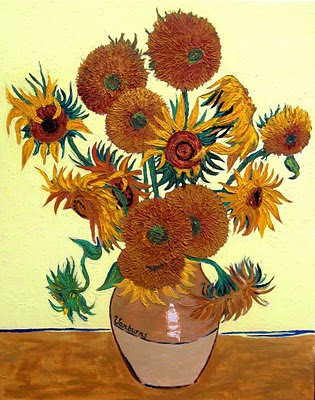
https://www.aliexpress.com/store/product/Copy-Van-Gogh-painting-sunflower-modern-impression-flowers-Wind-song-welcome-to-customize-a-variety-of/1232202_1811272858.html

joi, 25 august 2016

Istoria in Miniatura (History in miniature)

This was the title for a meeting between Romanian figurinists at an old chateau in Valcea county-Romania.
The chateau named conac in Romanian was the property of Balcescu family from Valachia, the part of Romania south of the Carpathian Mountains. Nicolae Balcescu played an important role in the formation of modern Romania.

In this idyllic setting near an old wooden church moved here from another village, with all that luxuriant green forests surrounding us, we gathered at the initiative of Nicolae Mihai, researcher at the Romanian Academy and a very dedicated figurine painter, being hosted by Mr. Antonie Chelcea, director at the Nicolae Balcescu's Memorial.

Some of us have been accompanied by our families and despite our fears they had a great time in the vast yard, playing sports and benefiting by the very clean and healthy environment.

The hosts have been at their highest level, all the personnel doing their best for us to feel as good as possible. We also visited the museum that has many well preserved pieces of art and history, conserving a certain feeling from an old and mysterious period.

The theme of the meeting was to paint an Arab archer bust, beautifully rendered by Mario Numitone.
As you can see in the pictures, two of our fellows are sculptors and they had a great time too, regardless our most stupid requests.
A novelty by all means was a representative of the graceful gender, miss Ileana Sadean (https://www.facebook.com/ileana.sadean.3?fref=ts), a well acquainted miniaturist that is creating all kinds of subjects from A to Z, completing very well the diversity and complexity of this domain.
As a treat for guests, visitors and hosts, a small area was dedicated to the exhibit of some of the latest works of the participants. It was a surprise also for us.

By far the kids were the most excited for being able to paint plastic soldiers and model tanks generously offered by Cristian Florescu (http://www.ww2germans.com/)

There had been 3 demonstrations by Catalin Balta - "Making model trees", Bogdan Papuse - "rendering moss on rocks and trees" and myself - "painting a face with oils on an acrylic base".

The atmosphere was great, and the artists that were staying at the location worked till late in the night, with no one to tell them to stop.

In the end the official sponsor http://www.machete.ro/ presented us with useful gifts to keep up working and dreaming on new projects.

Back home I made some new pictures to my bust and now I'm waiting for a few free minutes to pick his lints, give him a matte laquer and enhance the last details.

marți, 21 iunie 2016

The near jungle

It's rather unusual to think that you can drive 1 hour from Bucharest and find yourself in a jungle, fishing like on Nature Channel.
In the movie you can see and hear what I mean.
The location is on the Danube, at Giurgiu.
It was marvelous to cross this piece of forest in the morning, listening to the birds anf angling hear and there to catch an asp. Well, not even one was willing to cooperate.

https://www.youtube.com/watch?v=VII6ryKJlmU

miercuri, 25 mai 2016

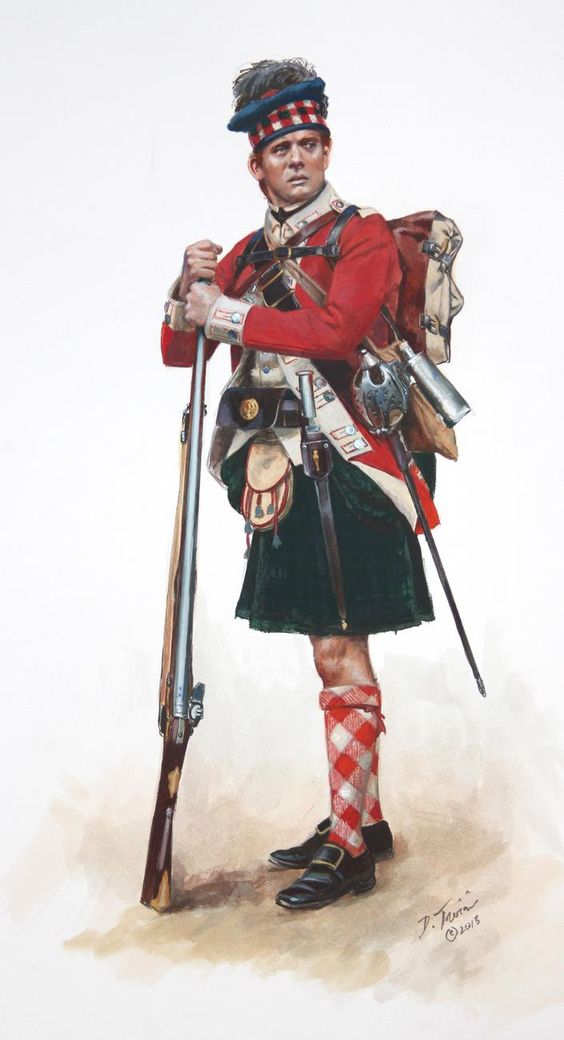
Red reflecting light - when figures are finished

In most of the cases when I present a figure, especially one with red clothes I get the same reaction from fellow modellers – “The red should be more modulated” or “there are not enough lights on that red” or “you should apply who knows which technique no.23” or just plain and simple, “let me know when you will finish this figure”.
First of all, there is not such a thing like finishing a painting. There are not a number of screws that you should put in place and when you finish them it means you have finished the work. Sometimes, parts of an artwork are left unfinished by artists with a purpose, but it’s not the case here. I remember I saw in progress work of some much respected painters thinking they should stop much earlier than they actually did.
Now in the particular case of red, we are talking about a color that due to the fact that is reflecting light so powerful tends to “eat” the fine graduations of light. A matte red surface will not reflect light as other colors, but with a higher intensity of that red. This mean there will be not pink or even orange, but just an intense light tone of red (scarlet, vermillon). You can see that in real world and also in paintings. In fact I guess the problem is that as long as painters try to reproduce a real world image, most often modellers are replicating other figures, painted by other more experienced modellers or are applying a set of techniques that have become a rule, a trend for anyone that want to count in jury’s eyes.
Bellow, see how different tones of red is reflecting light in real life, in paintings and in figurines.

Buy yourself a tube of light cadmium red or scarlet. Yes maybe it's not on the list at your course (class), but when you leave there you are allowed to think with your own brain.
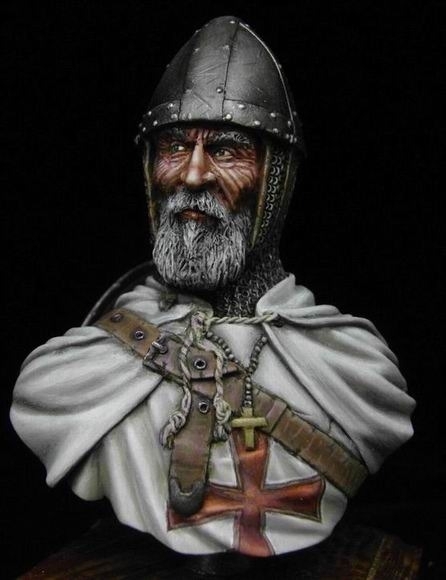
The same logic applies to faces. It seems that the vast majority of figurine painters are applying a set of techniques and a way of working the different plans of light and shade, as has been explained by some renowned painter. While this might be o.k. for bigger surfaces, in the particular case of small wrinkles and accidents of the surface, namely veins, scratches or scars, treating them with the same technique will inflate those details making the figure to look like a ceramic doll, with salami like limbs. It may be a question of taste but I try hard to avoid this.
To illustrate my opinion I took some arbitrary examples from the internet belonging to artists I don’t know. I will not post an image of one of my figures because I’m not trying to say that what I do is perfect, just that maybe I’m following a different ideal than others.

The only painter that didn't comply with the trend and did a wonderful job in my opinion is the author of the soviet soldier bust.
Stop puting those lights under the wrinkles starting down from the nostrils ! There should be shadow there, or at least a dimmer light. Same at the bags under the eyes. If you treat every wrinkle there with shadow and light, every kid will end up looking 90 years old. Wrinkles are volumes not colors.